Art World Horror Stories
Some of the art world's most unsettling stories begin with an existential question: what if the thing you believed to be true wasn't?
The most literal example is a preserved shark by Damien Hirst, a work about the impossibility of death that rotted in formaldehyde. It threw the question of death at its viewer in the exact opposite way it was meant to. In other cases, the lies come in the style of forgery and fraudulent exchanges of blue-chip works.
For Halloween, here are five stories from the scarier side of the glamorous art world. You've got to read through these tricks before you get your treat: get matched to an artwork based on your favourite horror movie.
$80 million in fakes
Knoedler & Company was in business for 165 years. Its reputation had been built over generations, with a client list that included major museums and prominent collectors. The scandal that emerged would expose just how much that reputation could obscure.

Stereoscopic photograph of the Knoedler gallery interior, c. 1860–1880
Between 1994 and 2011, the gallery sold paintings attributed to artists including Mark Rothko, Jackson Pollock and Robert Motherwell. The works were said to have come from an anonymous collector known as Mr X, who had supposedly acquired them directly from the artists decades earlier. Well, this Mr X could not be met, but in a prestige industry like the art world, anonymity is rarely treated as suspicious.
A painting attributed to Pollock, went to the hedge fund manager Pierre Lagrange for US$17 million. Another, attributed to Rothko, went to Domenico and Eleanore De Sole for US$8.3 million. But the paintings were forgeries. Their supposed provenance was invented, and the works had been produced by Pei-Shen Qian, a Chinese-born painter working out of Queens, New York. I'm forging here!
Knoedler's long history had lent the works credibility. Buyers were not simply assessing the paintings in front of them, but were relying on the gallery's reputation and on the account of how the works had entered the market. Once that account collapsed, the gallery's standing could no longer protect it, and so the historic gallery went...
These paintings had too many owners
Between 2016 and 2019, Inigo Philbrick, an art dealer with galleries in London and Miami, sold overlapping ownership interests in individual artworks to multiple buyers. Of course, none of them were told about the others, and, in some cases, the total ownership he sold exceeded 100 per cent. He also used artworks as collateral for loans without informing his co-owners, and supplied fraudulent contracts to conceal the scheme. One contract listed a stolen identity as the seller.
The sums involved exceeded US$86 million. When the scheme began to unravel in 2019, Philbrick fled overseas. He was arrested in Vanuatu in June 2020, after local authorities expelled him at the request of the US Embassy, and sentenced to seven years in prison.
The entire thing reads like an Industry plotline relocated to the art world. How many people can own the same painting before someone asks to see the paperwork?

40 years versus white paint
Wolfgang Beltracchi did not set out to copy paintings that already existed. Instead, he produced works that Max Ernst, Fernand Léger or André Derain and other major artists could plausibly have made, filling gaps in their oeuvres with paintings that had never been there.
He supported the works with made-up provenance, claiming they had come from his wife's grandfather's collection. Staged photographs and old-looking labels helped make the account convincing. The paintings passed through the market as authentic and landed in museums all over the world. For a while, Beltracchi had successfully altered art history.
In 2011, an alleged Heinrich Campendonk, supposedly dated at 1914, sold at auction for a record 2.8 million euros. But scientific analysis found that the work contained titanium white, a pigment that was only invented in the 1920s.

One of Beltracchi's forged Heinrich Campendonks
Things only unraveled from there, and these paintings that found their way into esteemed insitutional and private collections and deceived art assessors, finally had their true colours revealed. Beltracchi was sentenced to 6 years in prison and was ordered to pay 35 million euros in damages.
When the movie gets made, we hope Josh O'Connor gets to play Beltracchi.
The decaying shark

Hirst's The Physical Impossibility of
Death in the Mind of Someone Living
Damien Hirst's The Physical Impossibility of Death in the Mind of Someone Living consists of a tiger shark suspended in a tank of formaldehyde. First exhibited in 1992, the work was intended to confront viewers with the physical presence of death. The shark was dead, but its imposing form seemed to hold death at a distance.
Unfortunately, the shark began to decompose. By 1993, Saatchi gallery had the animal skinned and its skin stretched over a fibreglass mould. Collector Steven Cohen acquired the work in 2004, but the question of how to preserve it remained. Hirst eventually replaced the shark with another, caught off the coast of Queensland, and remade the work using a revised preservation process.

The rotted shark in it's tank
The episode raises a question that has followed the work ever since: if the central object is replaced, does the artwork remain the same? Hirst has treated the work as conceptual. Its identity rests partly in the idea it embodies, rather than solely in the original animal.
A lot of people's worst fear is being replaced. We hope that doesn't extend to animals, because, well...
A $139 million accident

In October 2006, casino magnate Steve Wynn agreed to sell Pablo Picasso's Le Rêve for US$139 million, a price that would have set a record at the time. Shortly afterwards, Wynn was showing the painting to guests in his Las Vegas office. He gestured with his arm and accidentally put his elbow through the canvas.
The incident was witnessed by writer and filmmaker Nora Ephron, who later recounted Wynn's reaction: "Look what I've done. Thank goodness it was me."
Wynn released the buyer, from the sale and arranged for the painting to be repaired. He ultimately decided to keep it. If there is anything mystical about the art world, it might just be a conservator's skills.
Your horror film, matched to a work of art
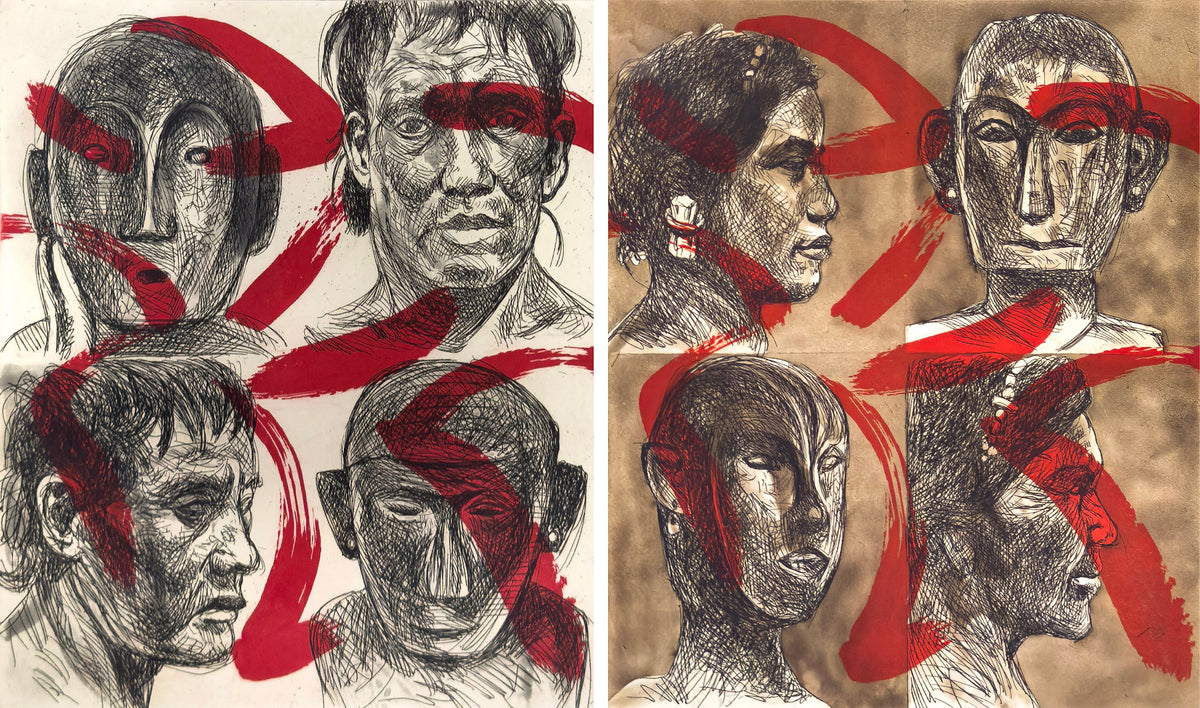
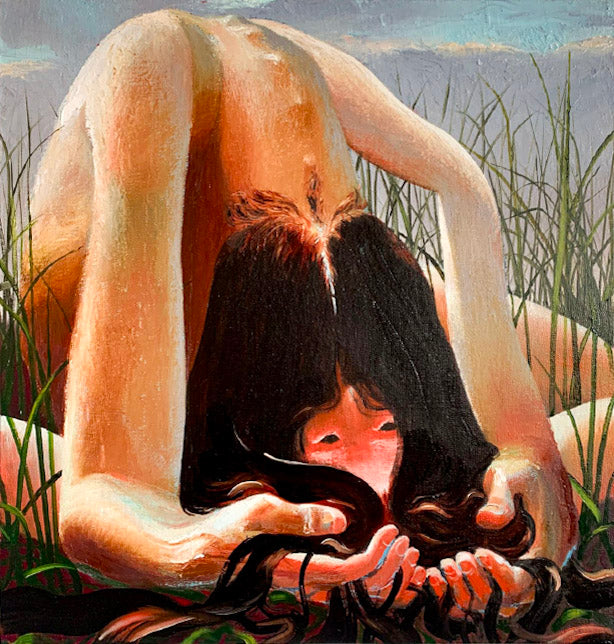
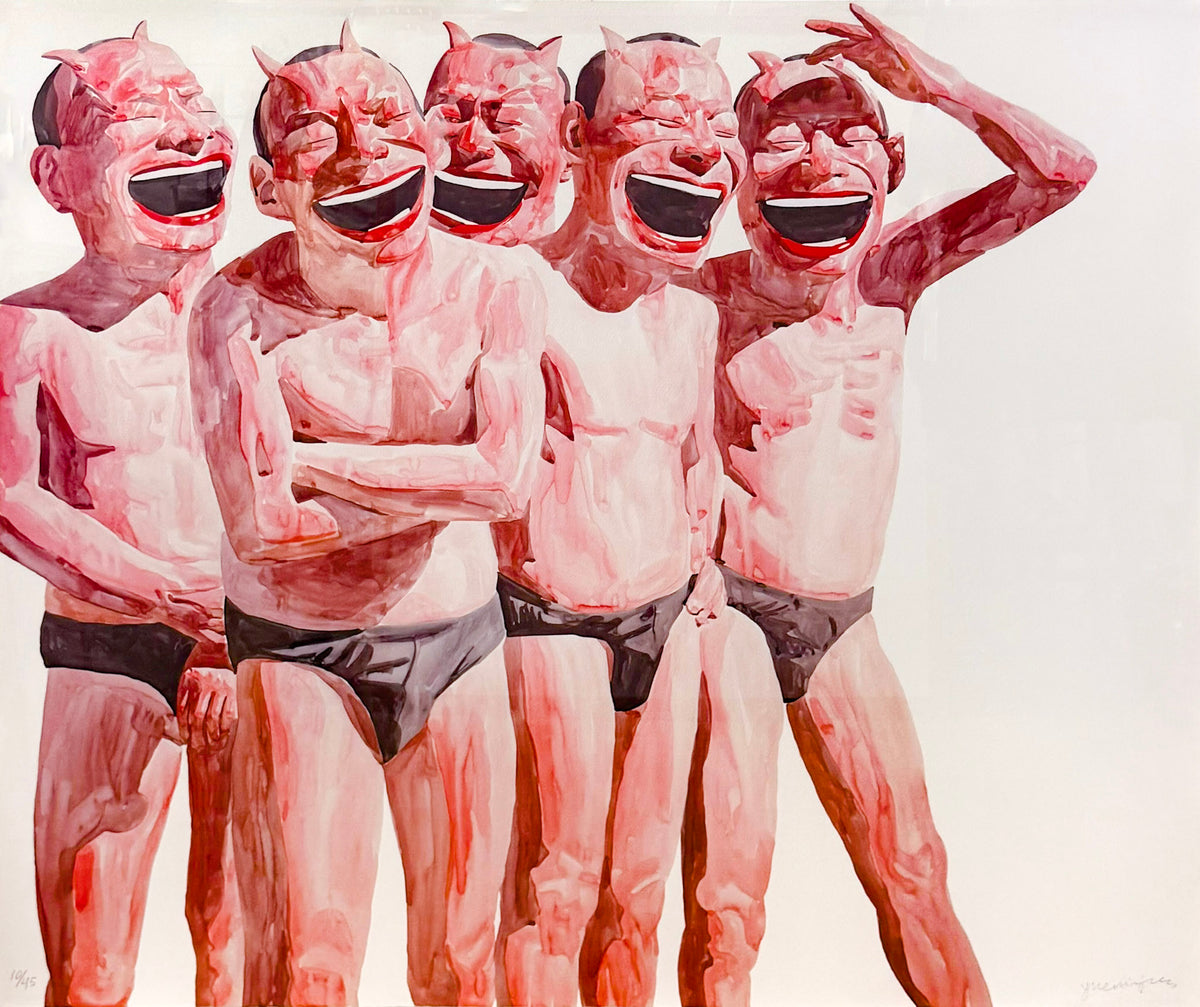
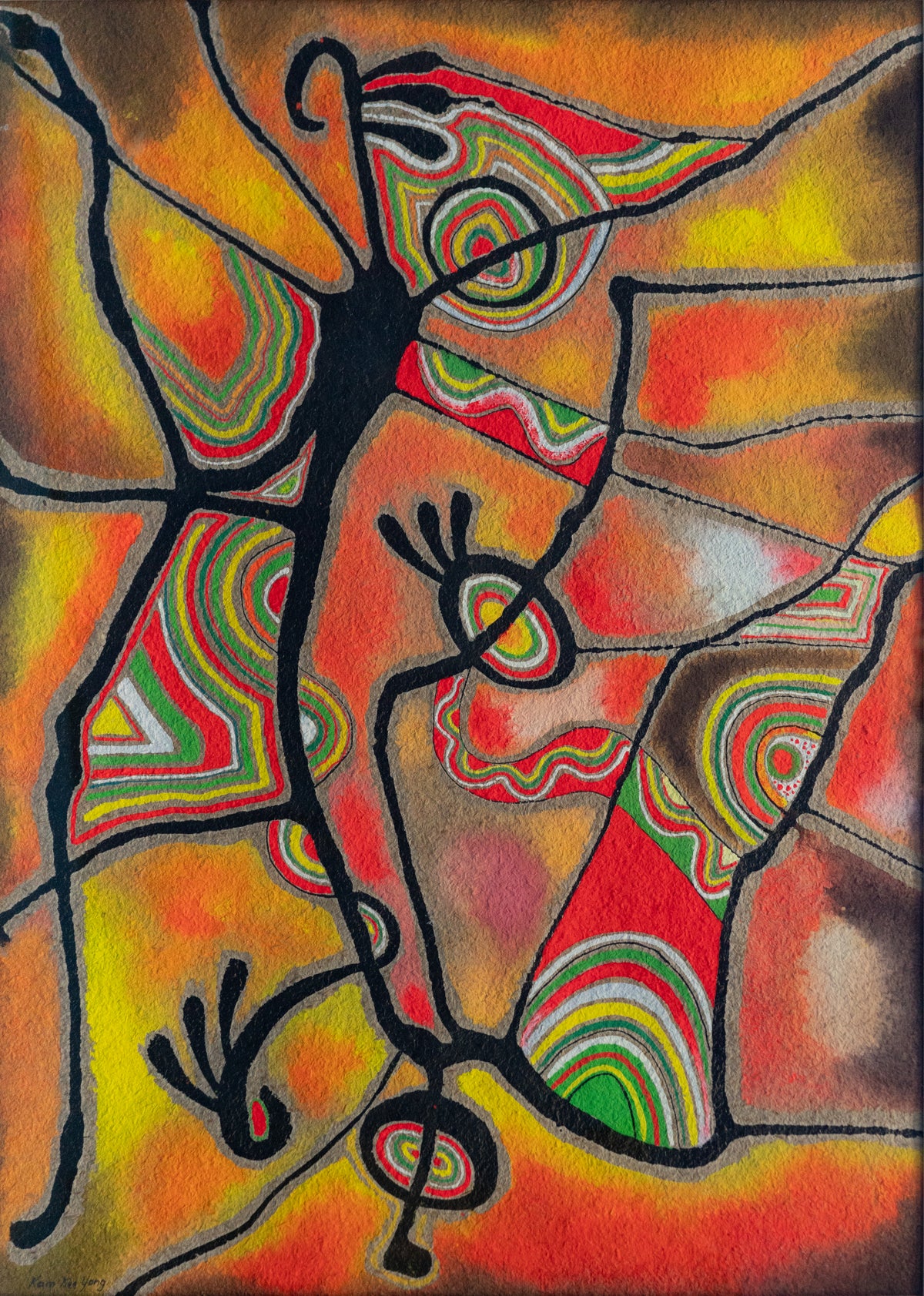
Horror films reveal something about what unsettles us. Some turn on the familiar becoming strange; others on what lies beneath an apparently ordinary surface. With that in mind, we have paired a few of our favourite horror films with works from our marketplace.
| You might like… | |
|---|---|
|
|
|
|
|
|
|
|
|
|
|
|
|
|
|
|
|
|