
What Makes Art, Queer?
What do we mean when we say queer art? The conventional markers of the category are familiar: queer sensuality, figures, same-sex desire. Beyond that, though, what makes a work queer? Does the artist play a part? Does the viewer? Or does it rest mostly on the subject?
This Pride Month, we wanted to spotlight the category and sit with the question properly. It turns out there is more to queer art than meets the eye.
The Dominant Reading
What is usually regarded as queer art are works that centre same-sex desire and sexuality, intimacy, and the queer body. In works deemed queer art, sensuality becomes both subject and form, and because of its unconventionality, is read as political.
Historically, for a community whose existence was criminalised and whose desire pathologised, putting the body on the wall was an act of resistance. Queer sensuality in art was visibility when visibility was dangerous. To depict queerness explicitly was to invite censure.
The National Gallery's current exhibition, Passion is Volcanic: Desire in Southeast Asian Art [1], holds many such works. Teng Nee Cheong, long admired for his treatment of the nude, is represented by an oil of one man pleasuring another. His queerness adds a layer of understanding and experience, and here, the sexual act is rendered with all the grace, beauty and skill he could bring to it. Nearby, IGAK Murniasih's renderings of the female body and its desires are frank and unapologetic, reflective of the artist's own [2]. These works carry the dominant reading proudly. Queer sensuality as liberation, a way of putting forth the queer experience in full view.
|
|
|
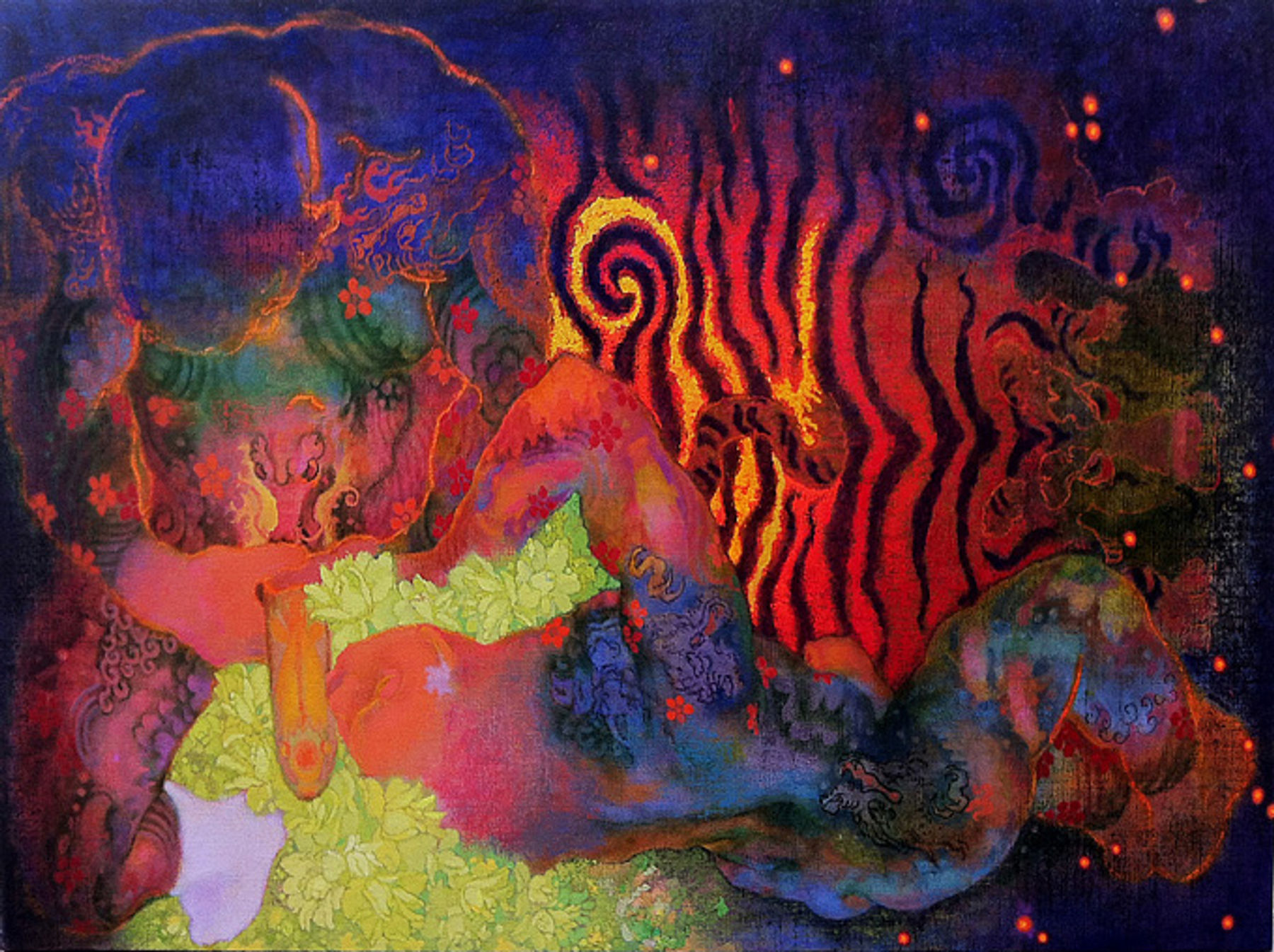
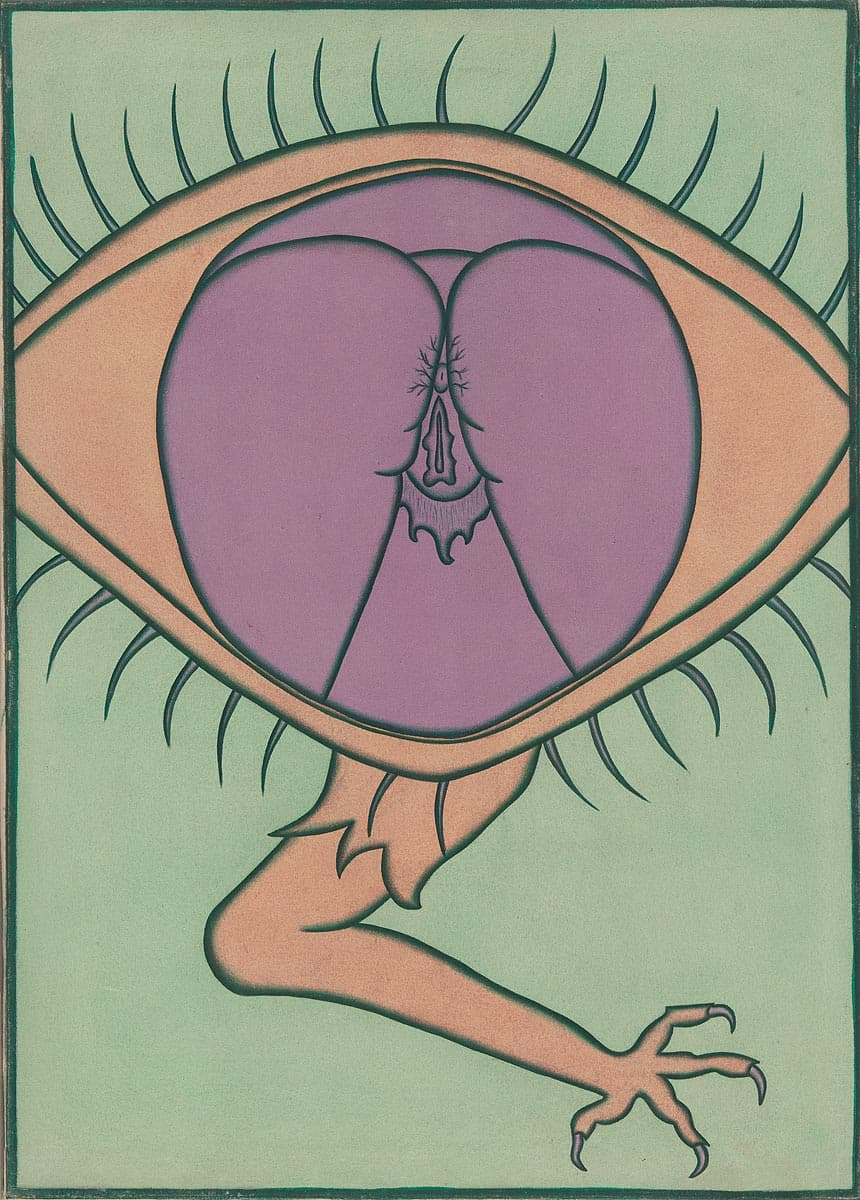
But when we equate queer art only with works depicting sensuality, the equation may start to feel reductive, as if the queer experience amounts to sex, or as if desire were its most important register when the experience is much larger than that.
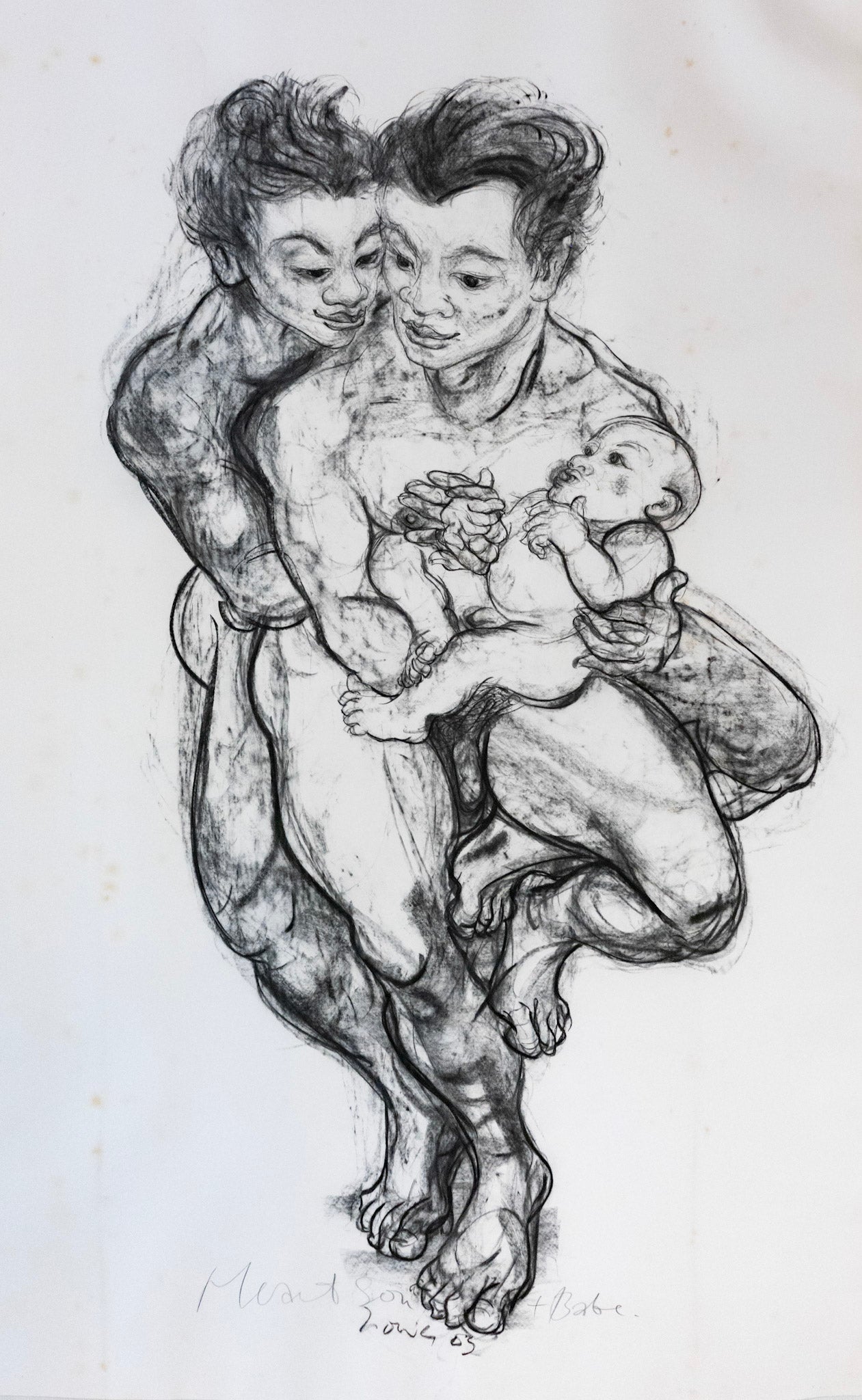
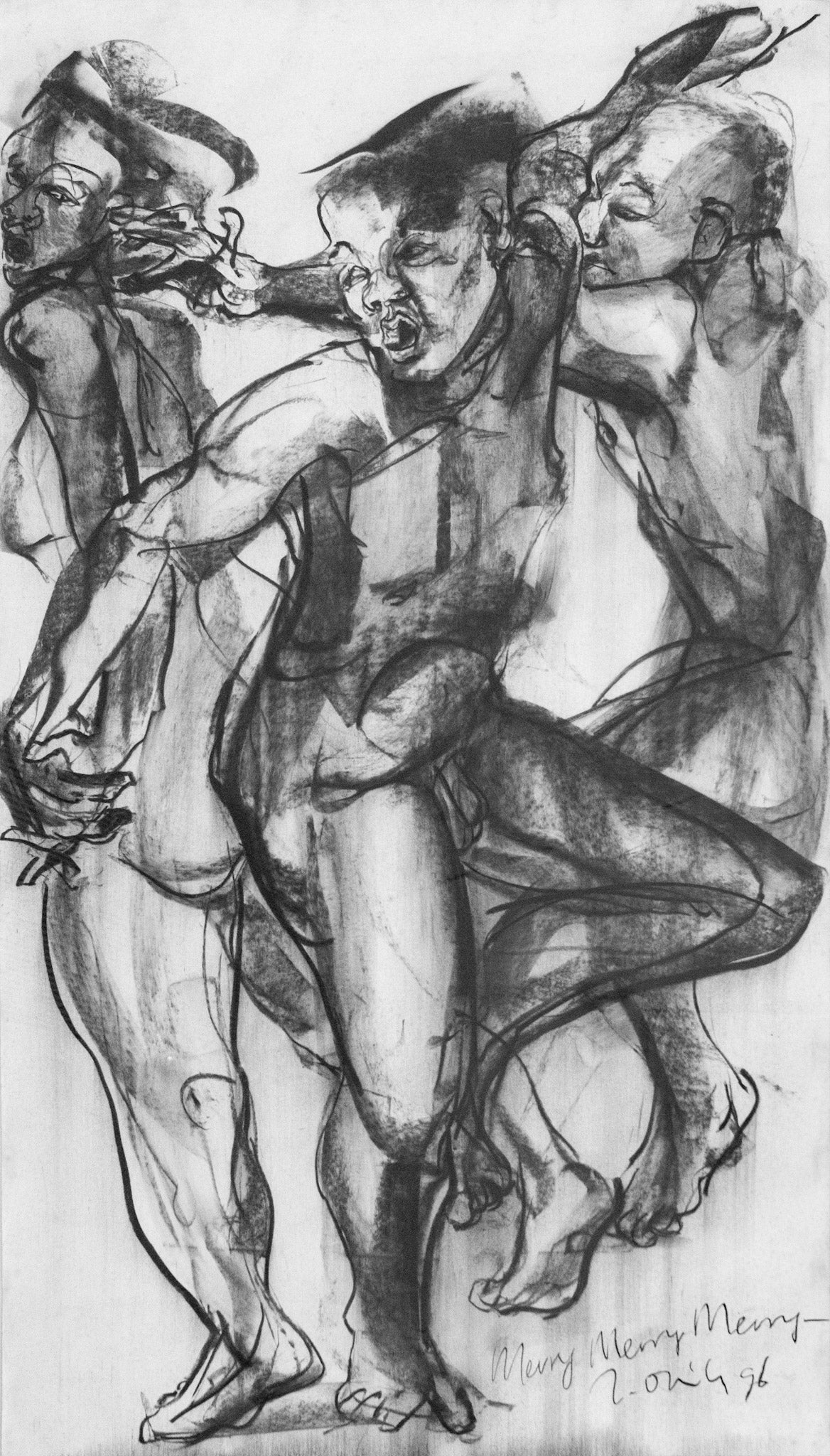
In the same show, a behemoth work by Jimmy Ong takes over an entire wall, depicting a couple kissing on a bench known for heterosexual courtship. Phallic and vaginal motifs surround the two figures, and yet what overtakes the figures is not desire but something closer to despair. Ong's identity as a gay man seems to shroud the work, holding the ache of a love that cannot be shown in public the way a heterosexual couple's can. Within it, the quiet weight of living as a dutiful son inside the constraint of homosexuality lives. It sits within the dominant reading and exceeds it at the same time. The sensuality is there, but it isn't the point.
 |
|
 |
|
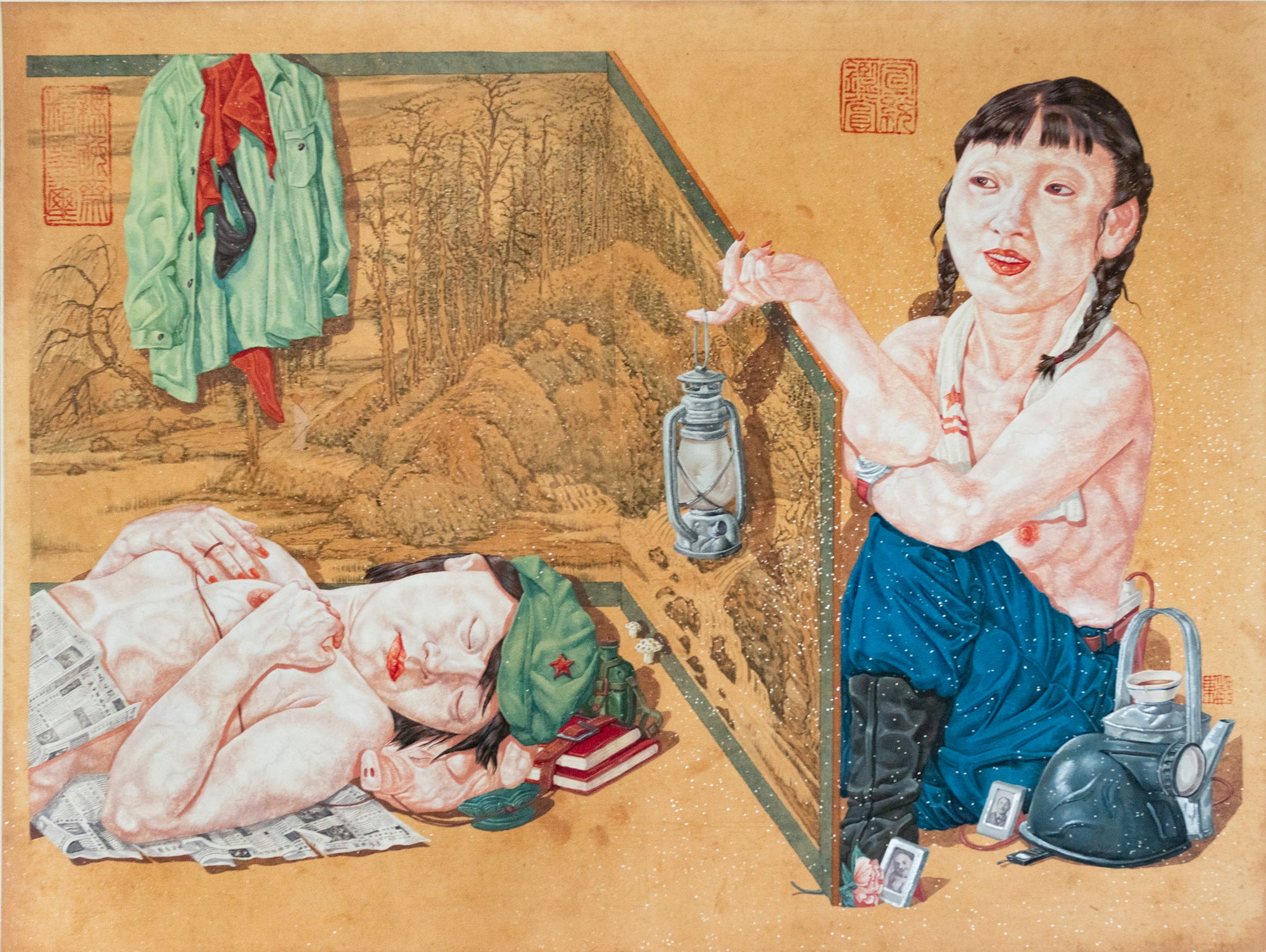
Jimmy Ong Heart Son + Babe, 2003 |
Jimmy Ong Merry Merry Merry, 1996 |
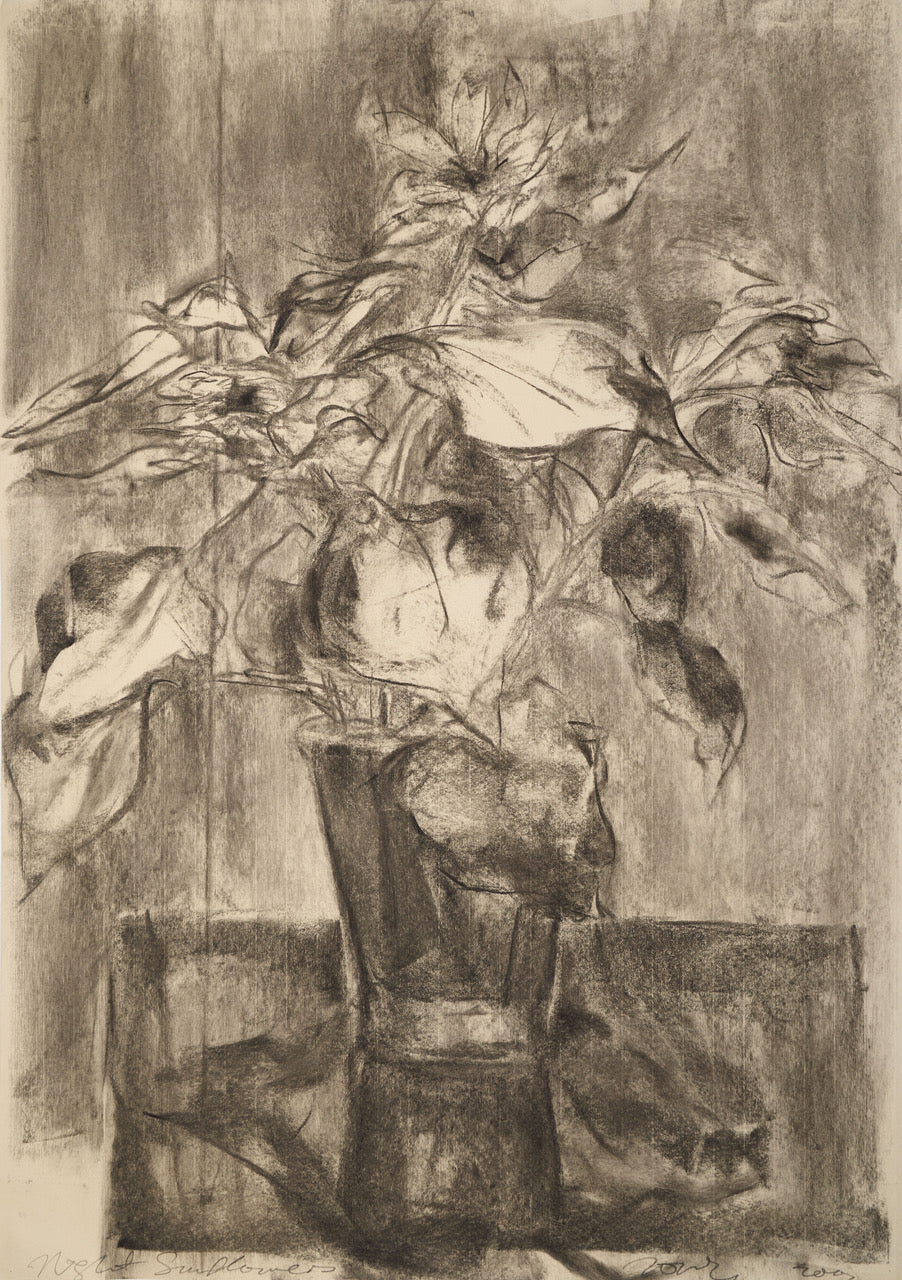
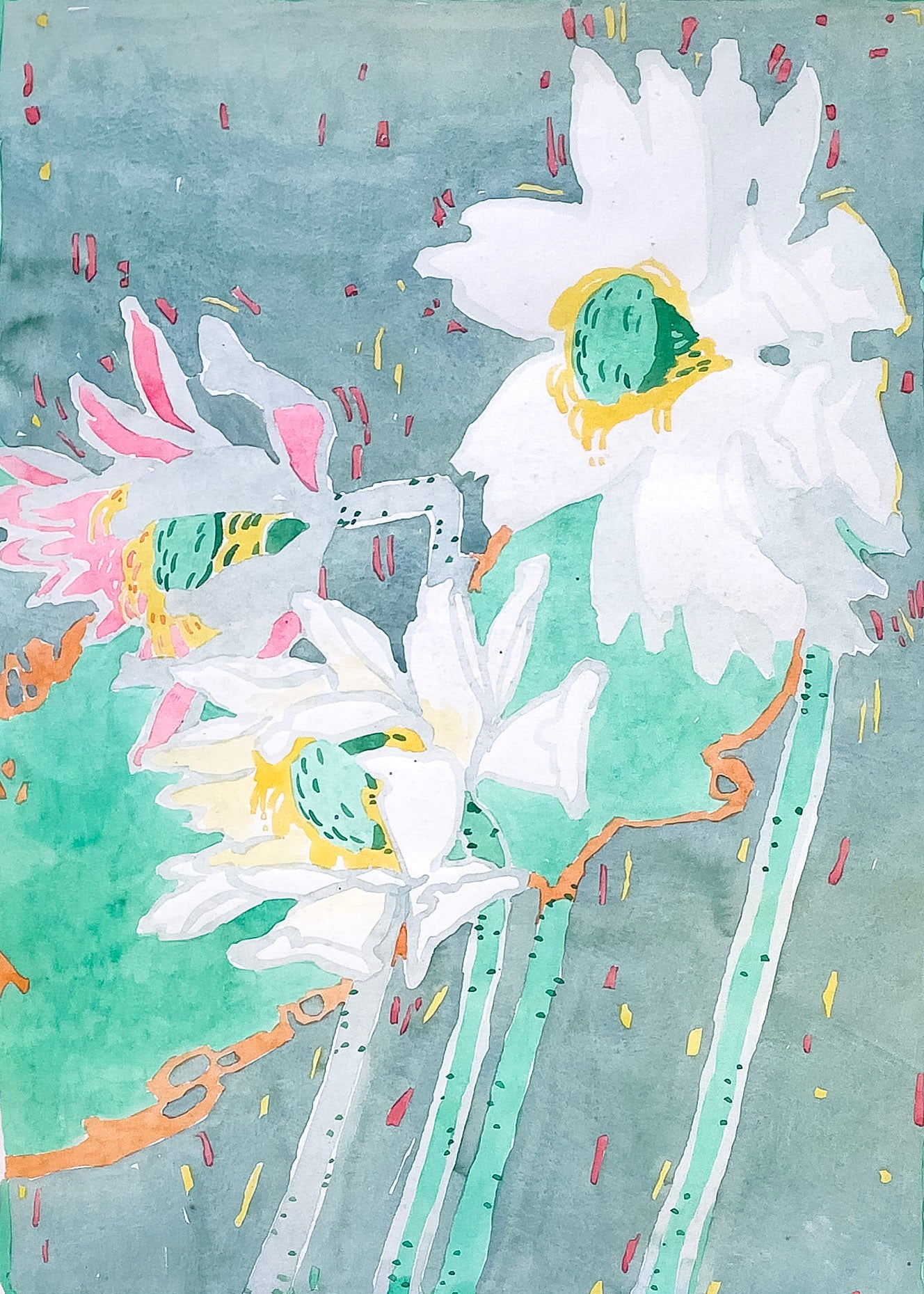
Jimmy Ong Night Sunflowers (Night Still Life series), 2002 |
Reading the Implicit
The queer experience in Southeast Asia runs deeper than the framework we have inherited. Art historian Simon Soon, writing on the batik paintings of Patrick Ng Kah Onn in 1960s Malaysia, borrows the phrase "queer before gay" from theorist Douglas Crimp: the idea that desire was being articulated and negotiated in this region in ways that predate, and sit outside, the Western liberation movement that later defined what queer identity and queer culture look like [3]. Ng painted male nudes in batik, a medium then being claimed as national heritage, and in one self-portrait depicted himself as a Malay woman. His works registered desire and an instability of gender and race that the usual national art histories do not account for.
Patrick Ng Kah Onn, Self-Portrait, 1958
For many queer people, queerness is not one detail among others. It shapes how a person moves through the world, in ways they are aware of and in ways they are not. In a place like Singapore, where the social environment has long been conservative, identifying as queer almost inevitably involves some period of estrangement, from others or from oneself. It would be strange to think this leaves no trace in the work of a queer artist, given how directly art draws on life.
The trace may not always look like desire, but surface as tension, concealment, humour, or as the recurring need to break free. Widening how we look is a way of letting the work hold more of the experience it may have come from, without reducing the artist to a single aspect of who they are.
Which raises a question close to home. Ng Eng Teng, one of Singapore's most celebrated sculptors, was gay [4]. His works are never referred to as queer art, and his sexuality rarely enters conversations about his practice. Yet his entire body of work was preoccupied with the figure, and not the idealised figure: bodies scrunched into masses of tension, bodies contorted, bodies that art historian T.K. Sabapathy described as predominantly afflicted [5]. The standard reading ties this to Ng's own ill health, the tuberculosis that disrupted his youth and the kidney and heart conditions that eventually took his life. The affliction in the work, in this account, is illness.
|
|
Artist Ng Eng Teng |
|


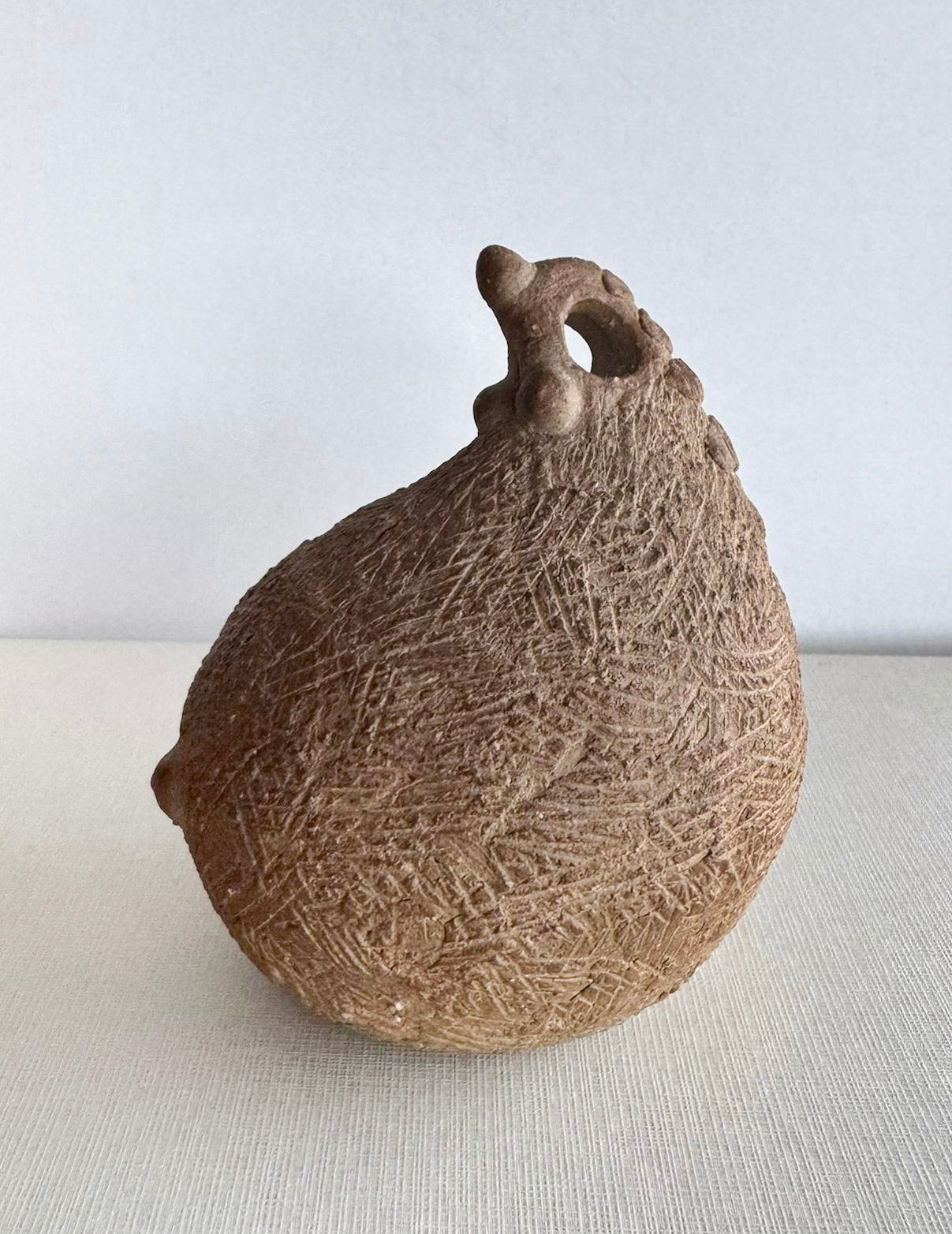
But there is a moment in a 1998 interview that resists this neat explanation. Asked about his Liberation series, figures struggling to free themselves from bindings, Ng declined to explain, saying only that the work held something deeply personal that would be revealed in years to come, the way his tuberculosis once was. The series, he offered, was about "the difficulty of getting out of being what you are" [6].
His interviewers and historians have circled this carefully, returning it to the safer ground of his illness. A queer reading does not have to circle. Read through queerness, the bound figure trying to break out, the bodies twisting into strange and unruly forms, the phallic shapes that recur through his practice, the playfulness that surfaces in works like Finger... Pinky, all of it gathers into something more legible: a body holding something in, and the immense effort of that holding [7]. Whether this is the secret Ng meant, we cannot know, and that is rather the point. The lens does not settle the question. It lets the work carry more than the official account allows.
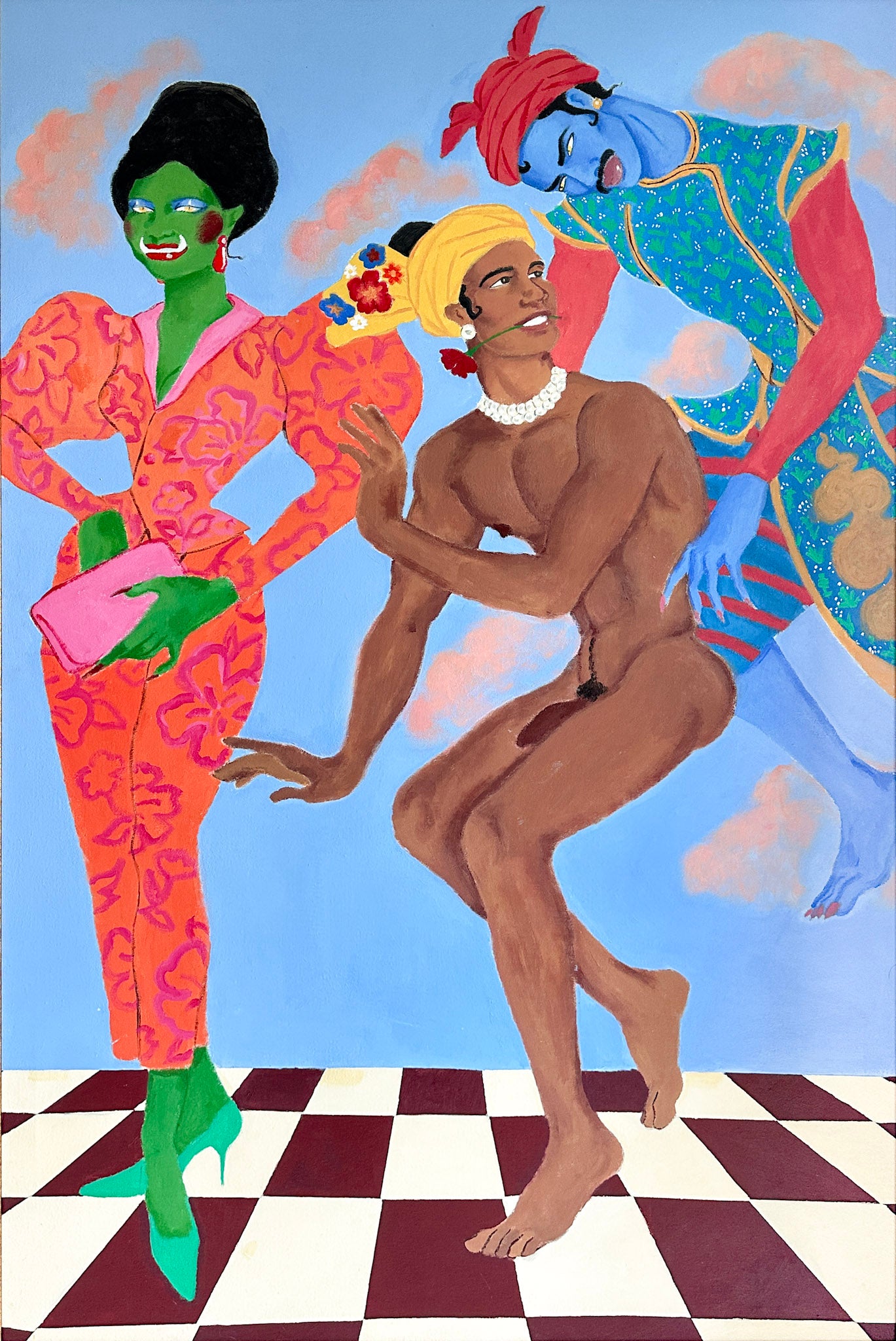
Of course, we have to acknowledge the bravery of artists who refuse concealment entirely, making their work unabashedly queer despite conservative surroundings. Burmese painter Richie Nath inserts queer characters into the folklore and legends of his childhood, where they fight, flirt and pose their way through mythical worlds, created almost in defiance of the conservative society he grew up in. Nath's Dream of a Flower-Eating Ogress, available through Art Again, declares both queer experience and cultural heritage openly, holding the two together without apology.
|
Richie Nath, Dream of a Flower-Eating Ogress, 2020 Acrylic on canvas 132 x 89 cm (visible), 148.6 x 104 cm (framed) SGD 5,000. View listing. |
Queerness as a Lens
There is a distinction worth making between queer art as a category and queerness as a lens. Instead of asking whether a work qualifies, a lens asks: what does reading this work through queerness reveal that another reading would miss?
Art historian David Getsy has written about the tendency to identify queer art only when it depicts LGBT subjects, is made by a self-identified LGBT person, or references gay culture through recognisable motifs. Artist Gordon Hall called this "the glitter problem": legibility becomes the condition for recognition, and everything that does not announce itself gets left out [8].
A queer reading, applied with care, surfaces something already present in the work and adds a layer other readings could not see. Applied this way, the range of what queer art can be expands. It makes room for work shaped and informed by the expanse that is the queer experience.
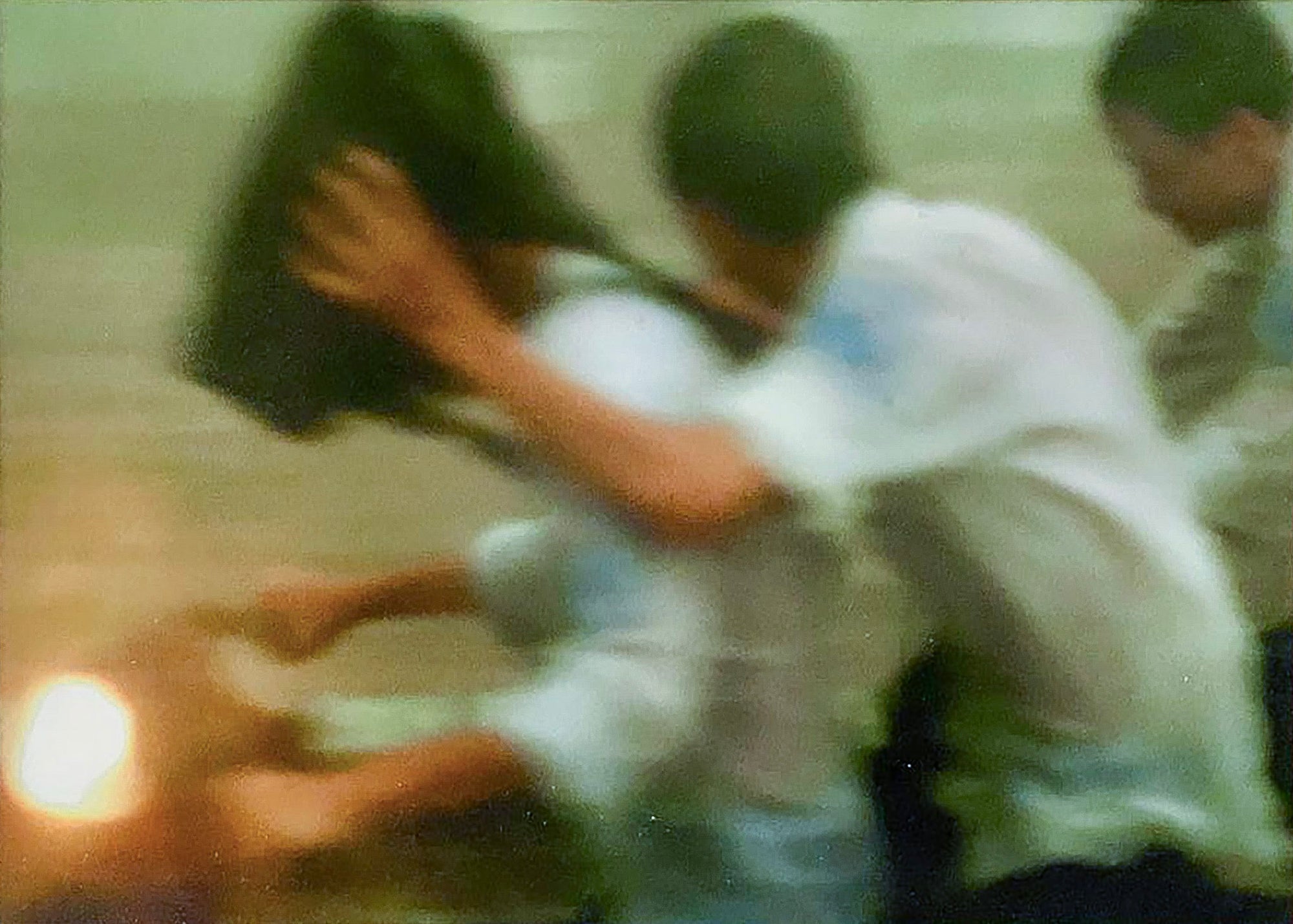
Sherman Ong, Monsoon: The Mechanics of Rain, Mobility, and Intervention, 2006
What This Means for Collecting
Some collectors have built their own queer collections, spending years seeking out these works and keeping them close. In doing so, they have preserved a visual history that institutions were often slow to claim. These collections are acts of care as much as taste, and the queer lives held in those works stay alive because someone chose to keep looking.
Collecting this way can begin with a single work and a single question: not is this queer, but "what do I see in it that someone else might miss?" maybe a "does this work somehow, some way align with my own queer experience? could it reflect the artist's?" A collection grows from attention like that, one work at a time, each one a record of how you looked and what you chose to keep in view.
Queer art lives just as much in the quieter works and coded gestures as in the visible ones. If you are new to collecting and still finding your approach, noticing what a work might be holding, and what it means to you, is enough to begin with.
|
|
|
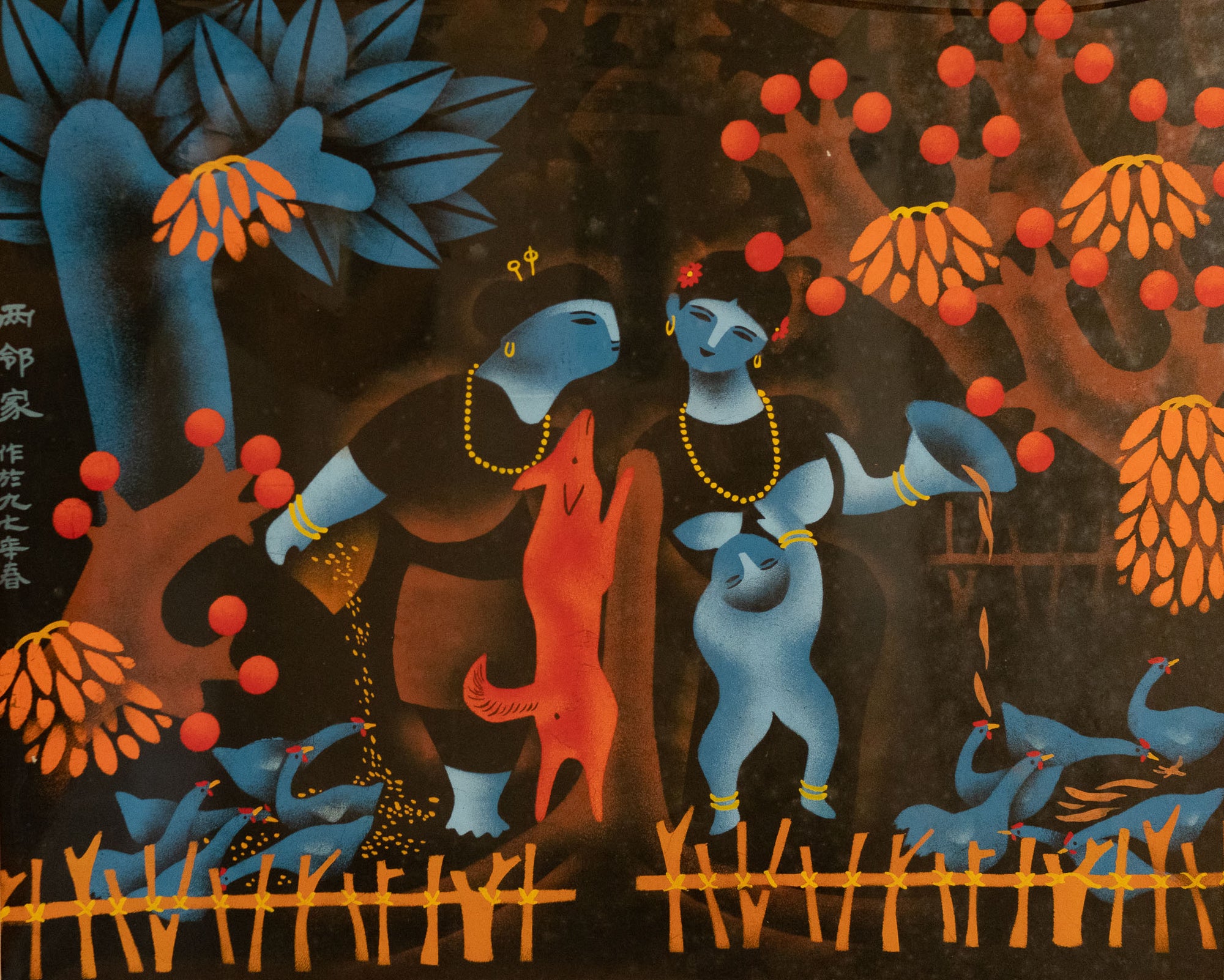
Unknown Artist, Neighbouring Relations: written in Spring 1997, 1997 |
We have a few charcoal nudes by the inimitable Teng Nee Cheong, all priced above $10K, extremely hard to come by, and available for purchase privately.
 |

|
 |
Written by
Fithriah Hashim
|
If you enjoyed this blogpost, consider buying me a coffee. Please scan the QR code here >>
What is "buy me a coffee"? Buy Me a Coffee is a way for people to tip or say thank you to content creators and creatives. |
 |
References
[1] Passion is Volcanic: Desire in Southeast Asian Art, National Gallery Singapore, 24 April to 30 August 2026. The Gallery's first exhibition classified R18, curated by Dr Patrick Flores (Chief Curator and Project Director) with co-curator Dr Adele Tan.
[2] I Gak Murniasih (1966–2006), Balinese artist whose paintings brought the female body and desire into open discussion within Indonesian visual art. Her works are held by institutions including National Gallery Singapore, the National Gallery of Australia and Museum MACAN.
[3] Simon Soon, 'Fabric and the Fabrication of a Queer Narrative: The Batik Paintings of Patrick Ng Kah Onn,' Intersections: Gender and Sexuality in Asia and the Pacific, Issue 38, August 2015. The phrase "queer before gay" is borrowed from Douglas Crimp.
[4] Ng Eng Teng (1934–2001), often called the grandfather of Singapore sculpture, known for figurative works in ceramic, bronze and ciment fondu. The Singapore LGBT Encyclopaedia Wiko
[5] T.K. Sabapathy, quoted on the body in Ng Eng Teng's art as "predominantly an afflicted entity." See Sabapathy, Ng Eng Teng: Art and Thoughts, Ng Eng Teng Gallery/NUS Museums, 1998.
[6] Ng Eng Teng, interviewed by curator Constance Sheares, 1999. The exchange is displayed at the NUS Museum.
[8] David Getsy, 'Ten Queer Theses on Abstraction,' in Queer Abstraction, ed. Jared Ledesma, Des Moines Art Center, 2019. Gordon Hall's "the glitter problem" is discussed therein.
[9] Soon, 'Fabric and the Fabrication of a Queer Narrative': batik nudes acquired by Universiti Sains Malaysia have not been exhibited in more conservative periods owing to their nude subjects.